Plug in. Charge. Install. Scan. Done.
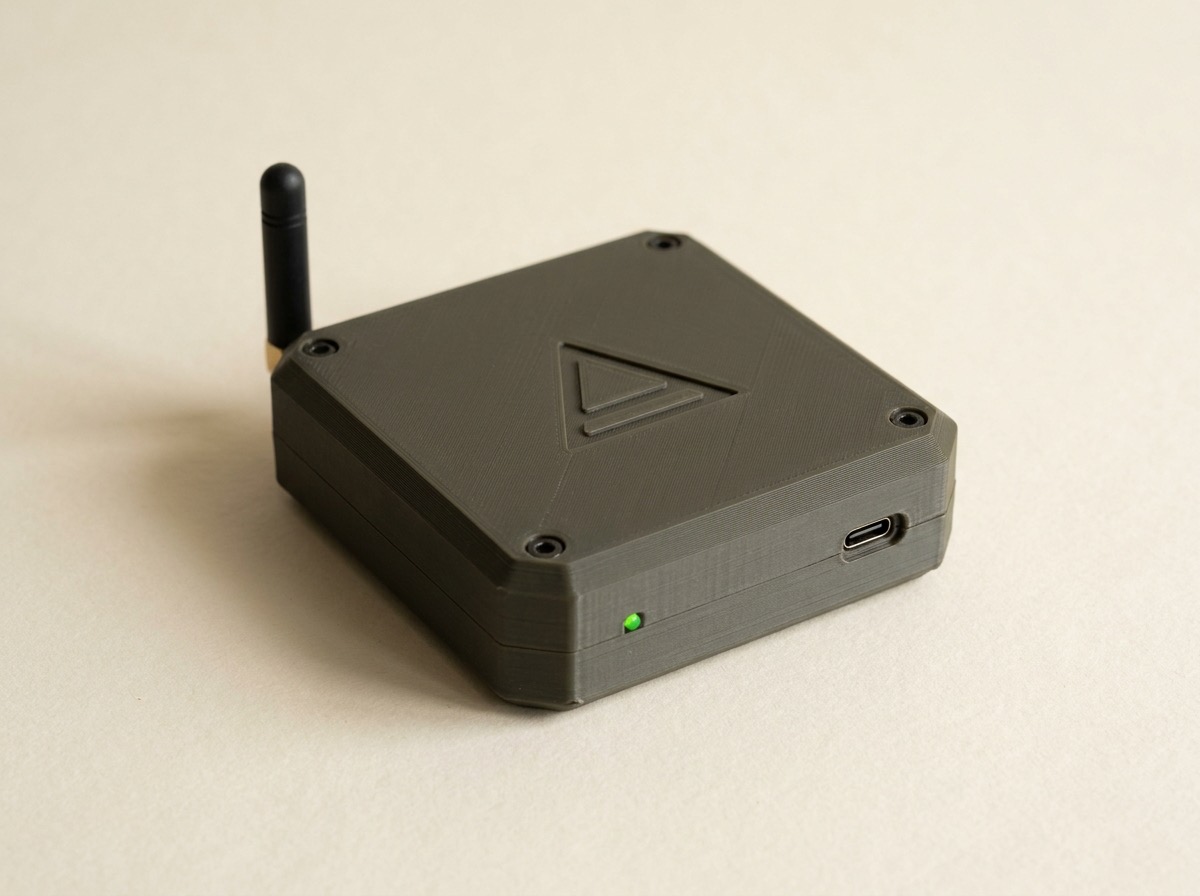
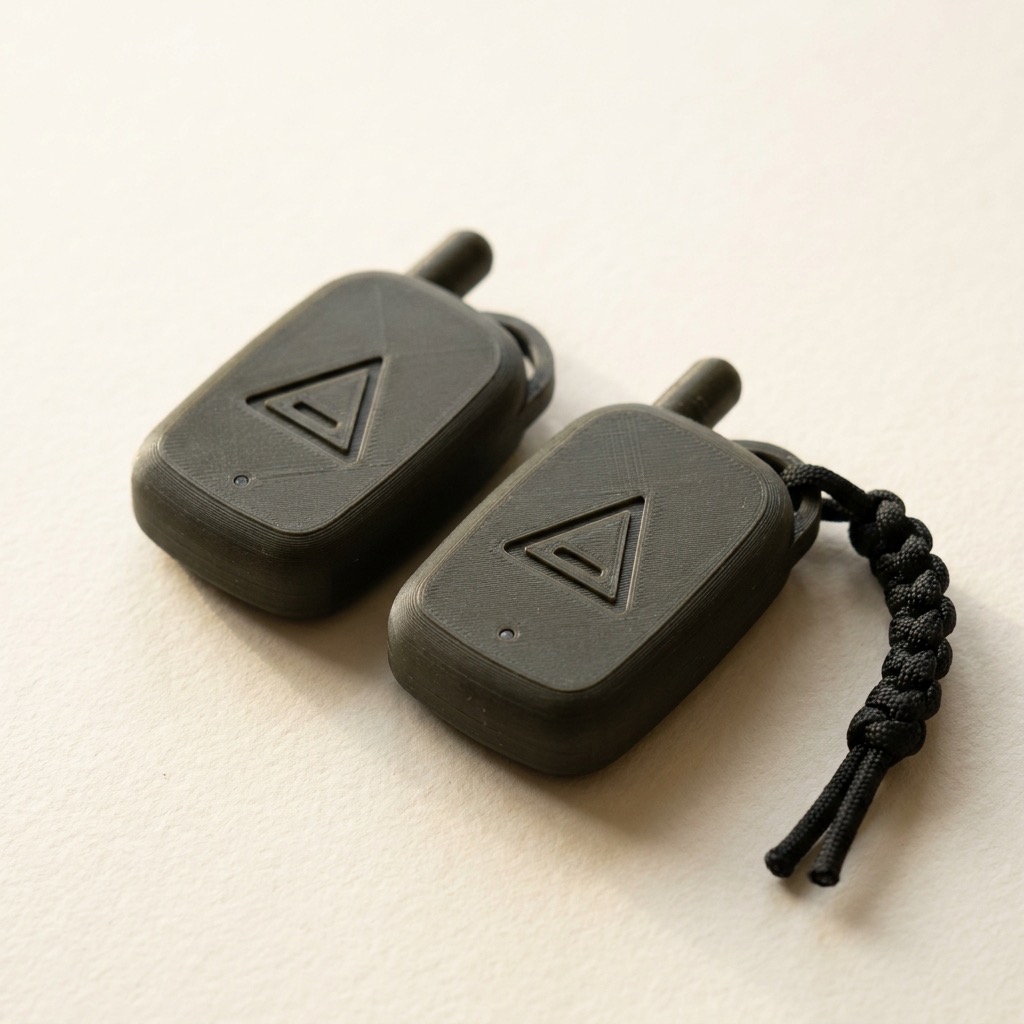
The Family Kit is a small box for the house and a pocket radio for each of you, flashed, keyed, named and tested as a set before it ships. You will never see a settings screen. Six steps, four of them tapping OK, and your family is on a map that needs no tower, no internet, and no account.
Six steps. Nothing to configure.
- Plug in the Node
It boots, broadcasts its own Wi-Fi, and serves the whole library to any phone on it. The name and passphrase are printed on the card.
- Charge the Beacons
Four pocket radios with GPS, already paired to your kit and to each other. Days on a charge.
- Install the app
One QR code on the card opens the App Store or Play listing. The one install flow everyone already trusts.
- Scan the kit card
One code joins your phone to the Node's Wi-Fi and to your family group. That is the whole setup.
- Scan your Beacon
The code on the Beacon tells the app which radio is yours. Type the printed pairing code once.
- Tap OK
Bluetooth, location, notifications, local network. The app explains each one in a sentence first. Then the map shows the family.
One box for the house. One radio for each of you.
The Node is the hub: it serves the library, runs the family map, holds messages for anyone out of range, and is a full node on your mesh. The Beacons are the pocket radios: GPS built in, days of battery, relaying for each other so ten of them in a valley extend each other's reach with no setup.
- Everything the family sends is sealed on the phone before it touches a radio.
- Add a Relay on the roof or a hill for coverage across a property or a valley.
- The operator in the family sees the same people in ATAK. The Node is a TAK server too.
- Voice at range stays on your GMRS or ham handhelds. The library teaches them; the plan includes them.
Grow it when you're ready.
Coverage for a property or a valley.
A weatherproof repeater on a small solar panel, already joined to your group. The only instruction is "put this box somewhere high," and the app's signal meter says better or worse as you walk.
Founding price $179
For the neighbors.
More pocket radios, provisioned to your group before they ship. A neighborhood group treats each household as a unit, with a board on the Node and roles like medic, generator and radio.
Founding price $149
The whole library on a stick.
A rugged 512 GB drive with the complete Vault, a one-click server for any laptop, a reader that needs no install at all, a Faraday sleeve, and a printed card deck. The go-bag item, and the gift.
Founding price $249
What the radios can and cannot do.
Range. Kilometers with line of sight, much more with a Relay at height. In a valley or a city, expect less, and expect the Relay to matter.
What travels. Text, positions, check-ins and status. Not voice, ever. Voice at range is what your GMRS or ham handhelds are for.
Security. Every message is sealed and signed by the app before the radio sees it, with a design published for anyone to inspect. Radio transmissions themselves can be detected by anyone listening. The library teaches transmit discipline for people who care about that.
Licensing. The radios use unlicensed spectrum. No license, no registration, no account.